

A Journey from Patterns to Intentional Relationships
One of the core ideas in Sarah’s work is the difference between living on autopilot and responding with intention. It’s easy to believe that because you spend a lot of time thinking, analyzing, and making decisions, you’re acting intentionally. But sometimes, even our most familiar choices are shaped by patterns we’ve learned over time—patterns that may have once served a purpose, even if they’re no longer giving us the results we want.
What messages have shaped the way you respond?
From Autopilot…
A LEARNED PROGRAM
The expectations around us can offer belonging and meaning. They can also become automatic scripts worth noticing with care.
-
The values, traditions, and expectations we learn from the communities and environments that shape us. Therapy can help you recognize which cultural messages guide your choices—and decide which ones still fit who you are today.
-
The beliefs, spiritual traditions, and values that give life meaning and shape how you relate to yourself and others. Therapy can create space to explore your beliefs while distinguishing personal conviction from expectations you may have inherited.
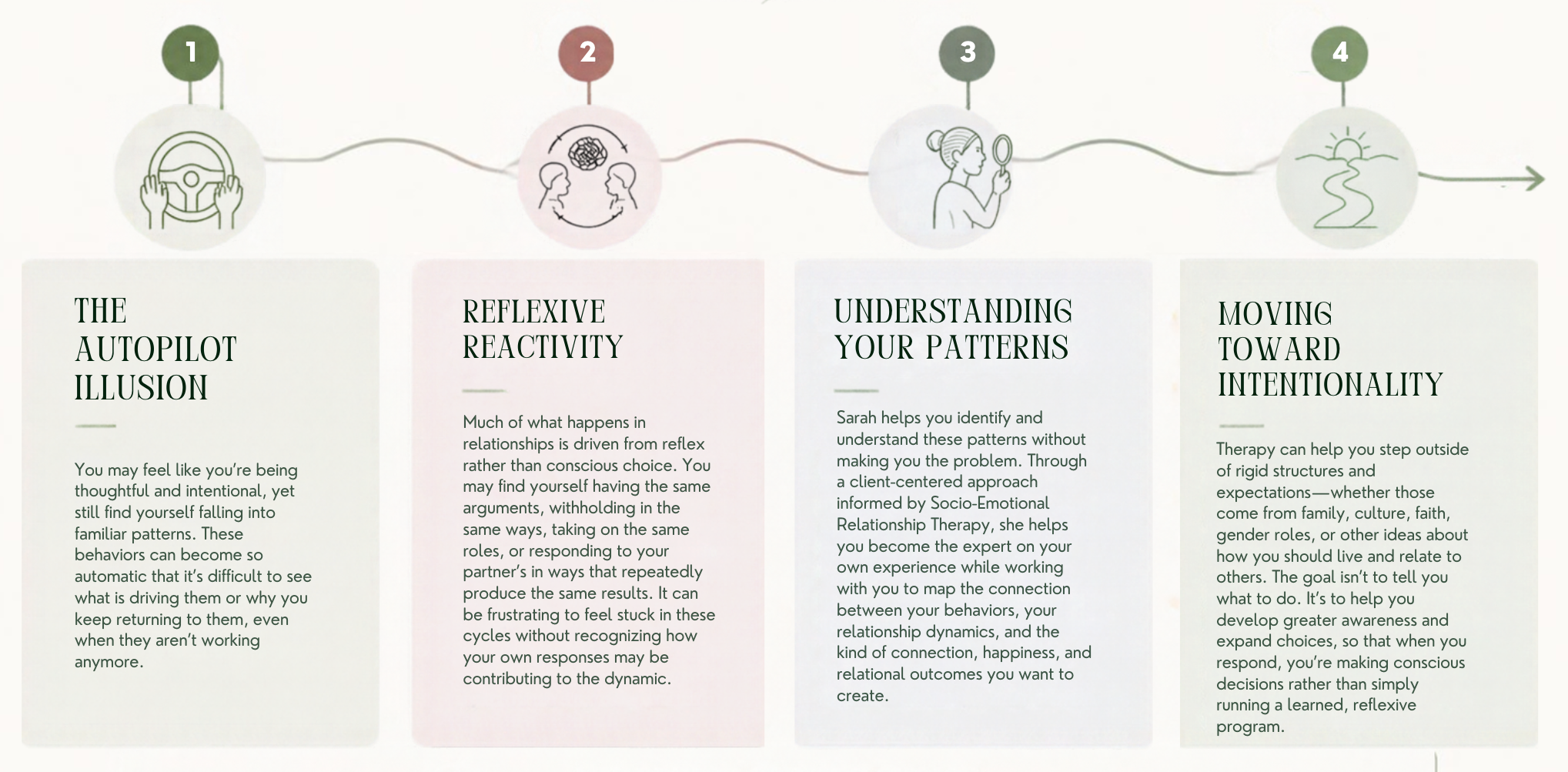
Recognize the pattern. Understand the dynamic. Choose a different response.
-
We all absorb messages about what a successful, healthy, loving, or “normal” life is supposed to look like. Therapy can help you identify these expectations, question automatic patterns, and create a way of living that reflects your own values and choices.
-
The messages we receive about how we are “supposed” to behave based on gender—including expectations around relationships, emotions, work, caregiving, and identity. Therapy can help you examine these messages and make more conscious choices about which ones you want to keep.
-
The patterns, roles, rules, and expectations we learn within our families. Therapy can help you understand how these experiences influence the way you communicate, connect, set boundaries, and respond to others.

…to Intentionality
Cultural & Spiritual Context Matters
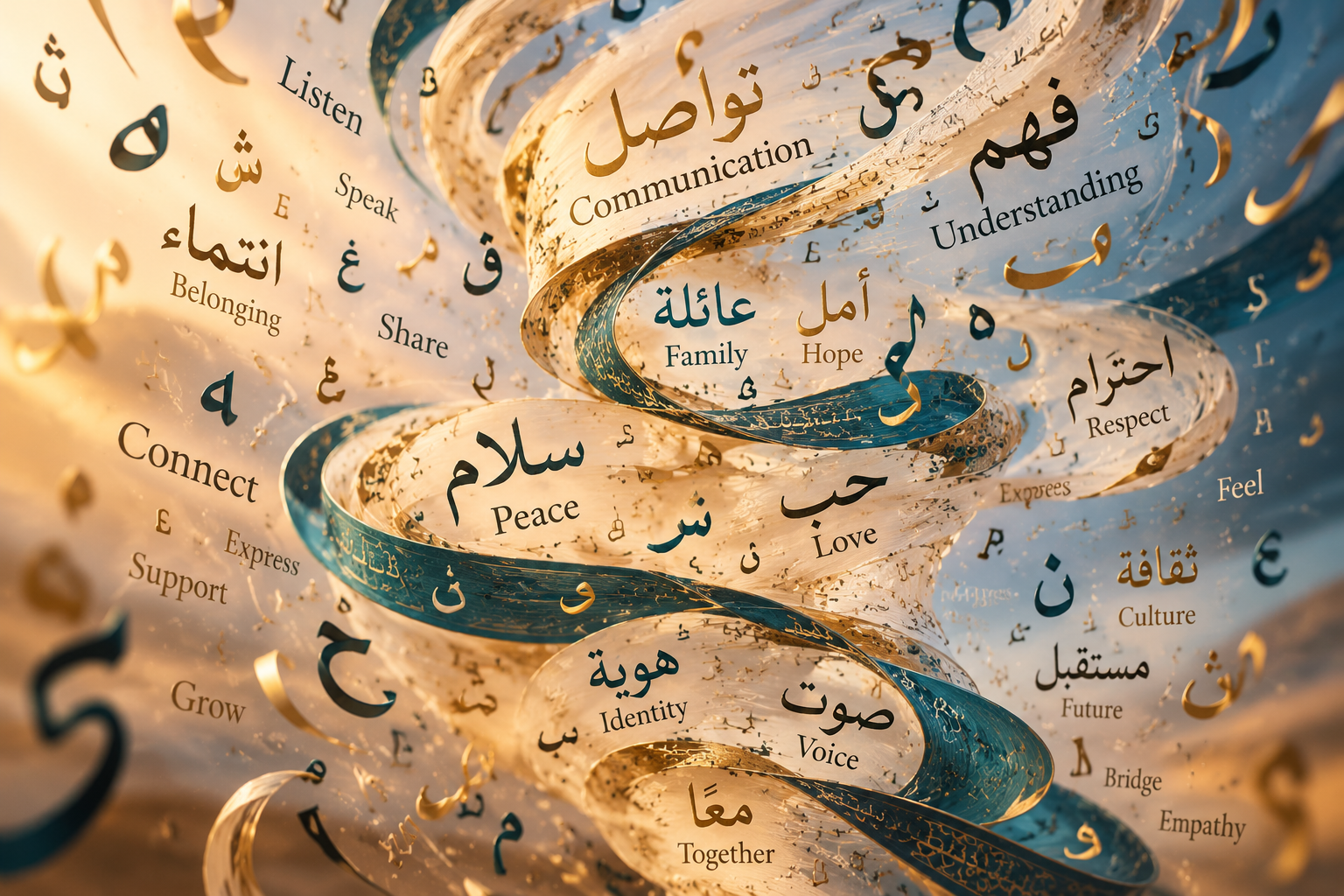
Culture and faith can be sources of connection, meaning, resilience, and belonging. They can also carry expectations around marriage, family, gender, responsibility, privacy, and what it means to be a good child, partner, or parent.
For many clients, these conversations often involve holding many things at once—personal values, faith, family relationships, community expectations, cultural identity, and the desire to make choices that feel authentic.
Sarah approaches these conversations with respect and curiosity, recognizing that there is no single or “right” way to be Muslim, Arab, Middle Eastern, West or South Asian, or part of any cultural community.